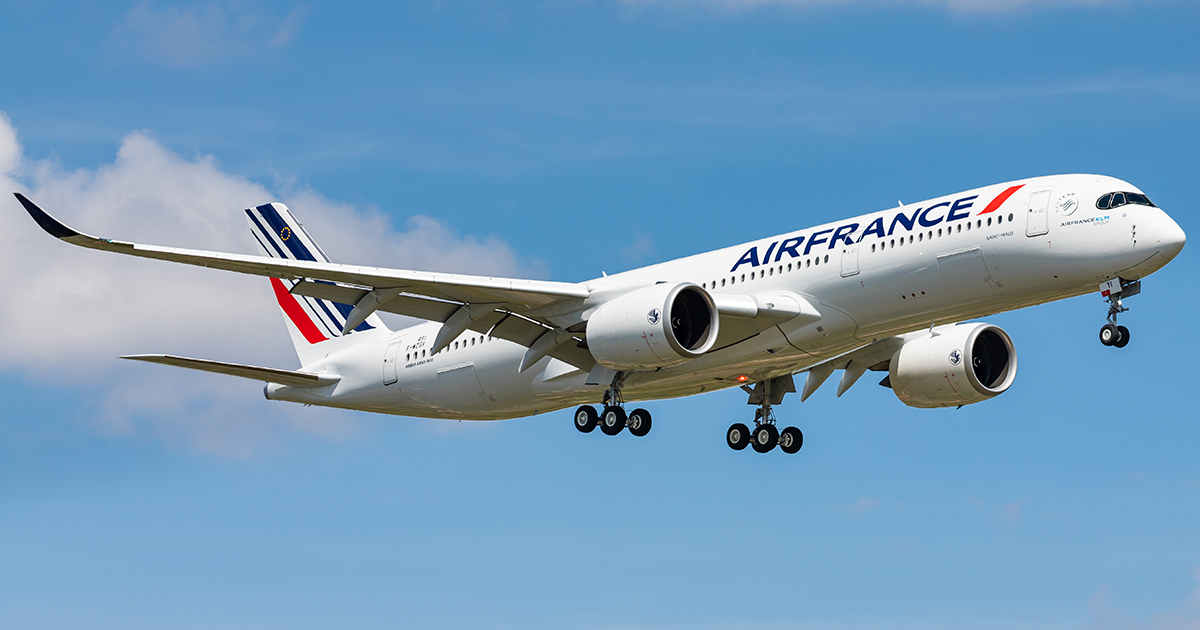
Air traffic controllers were forced to take urgent avoiding action at Los Angeles International Airport after an Air France Airbus A350-900 unexpectedly turned into the departure path of an AMERICAN Airlines AIRbus A321 shortly after takeoff.
The aircraft – which both took off from Los Angels international Airport (LAX)on 7 November – came within less than a nautical mile of each other, according to flight-tracking reconstructions.
Air traffic control intervened, ordering an immediate heading change and stopping the American Airlines aircraft’s climb.
The incident is the latest in a series of reported departure deviations involving aircraft departing from LAX’s runway 24L.
Air France aircraft turns towards parallel departure route
Air France flight AF28, operated by A350-900 F-HUVK, took off from runway 24L at approximately 12:15 am local time, bound for Papeete in French Polynesia. American Airlines flight AA1660, operated by A321-200 N191UW, departed from runway 25R about a minute later for Dallas/Fort Worth.
The two runways are the inner runways of LAX’s northern and southern parallel runway pairs. Both aircraft initially departed west over the Pacific.
AF28 reportedly had the SUMMR2 standard instrument departure assigned. The FAA’s SUMMR2 departure procedure at LAX requires aircraft departing from Runways 24L/R and 25L/R to climb on a heading of 251° to 640 feet before proceeding direct to their initial assigned waypoints.
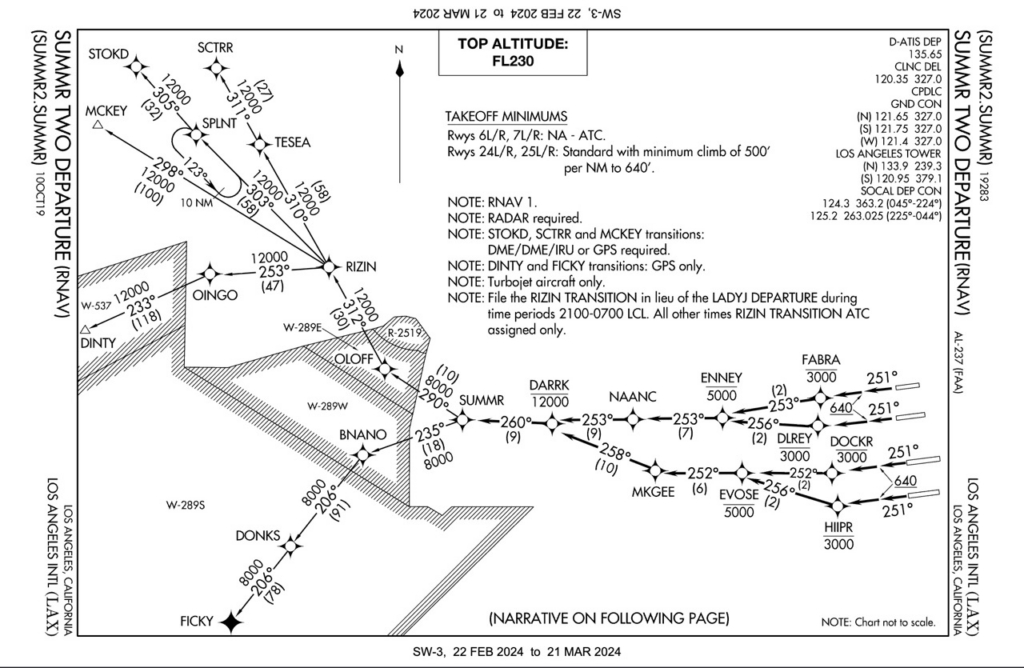
After takeoff, however, the A350 turned left towards the American Airlines aircraft’s departure path rather than continuing along its expected routing.
The American Airlines crew checked in with Southern California departure control at 2,000ft while climbing towards 5,000ft. Controllers then issued immediate instructions to both aircraft to avoid a collision.
Controller orders heading change and halts climb
In recorded ATC exchanges, the controller instructed the Air France crew to “fly heading 270 immediately”, directing the A350 westwards. Seconds later, the controller warned the American Airlines pilots of traffic at their 12 o’clock position, less than one mile away, and told them to maintain 2,000ft.
The American Airlines crew acknowledged the instruction, saying it would return to 2,000ft. The controller later cleared AA1660 to climb to 17,000ft, with a 250-knot speed restriction.
One published reconstruction of ADS-B tracking data estimated the closest horizontal separation at about 0.76 nautical miles (1.4km). According to ADS-B data published by flight-tracking company Wingbits, the aircraft were approximately 300ft apart vertically when separated by 1.6 nautical miles horizontally.
Other flight-tracking reports estimated vertical separation at around 400ft.
These figures are preliminary and do not establish whether either aircraft received a traffic collision avoidance system resolution advisory.
Air France crew questioned about departure clearance
After the immediate conflict had passed, the controller told the Air France pilots that they had been instructed to climb via the standard instrument departure rather than turn to a heading. When asked why the aircraft had turned, the crew initially replied, “Standby.”
The controller asked the Air France pilots to confirm the departure procedure they had been instructed to fly. The pilots ultimately confirmed the SUMMR2 departure. The controller directed the aircraft towards the DART waypoint and said there was “a possible pilot deviation,” providing a telephone number for the crew to report.
Afterwards, the controller apologised to the American Airlines crew, explaining that the other aircraft had turned in front of it. The American crew responded: “Great job, thank you.”

Both AF28 and AA1660 continued safely. Neither Air France nor American Airlines had issued statements on the incident at the time of writing.
The latest close call follows two other reported departure deviations involving aircraft taking off from runway 24L at LAX.
On 20 October 2026, a TAP Air Portugal A330-900 made an unexpected left turn shortly after departure.
On 31 October 2025, an ITA Airways A330-900 turned towards an American Airlines A321 departing from parallel runway 25R. ADS-B data showed that the ITA Airways A330-900 and American Airlines A321 came within 0.6 nautical miles horizontally while flying at the same altitude.